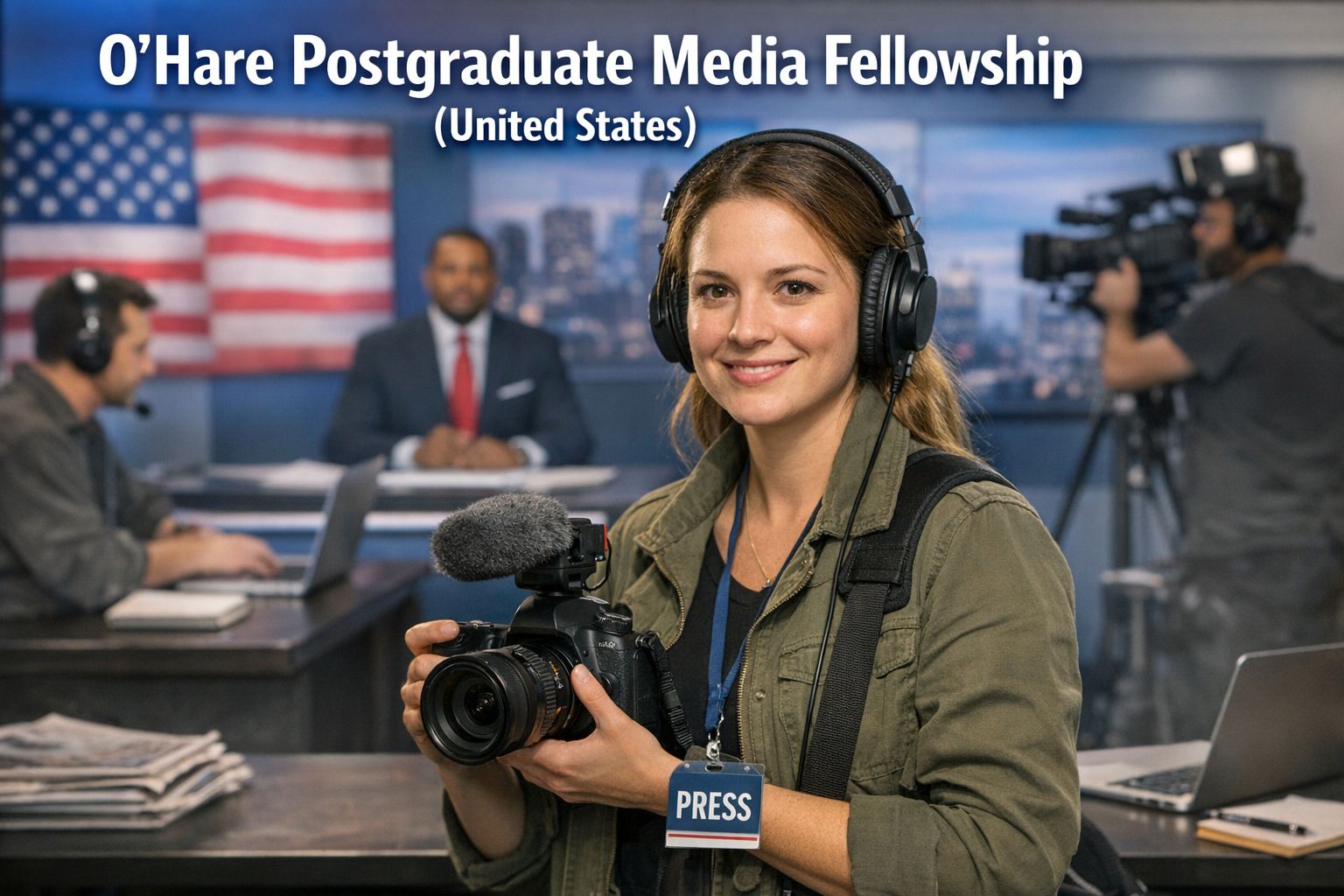
The O’Hare Postgraduate Fellowship is a prestigious opportunity designed for aspiring journalists and media professionals seeking hands-on newsroom experience, ethical formation, and professional growth in the United States. Named in honor of Joseph A. O’Hare, S.J., former president of Fordham University and editor-in-chief of America Magazine, the fellowship reflects a deep commitment to excellence in journalism, intellectual rigor, and public service reporting.
The Joseph A. O’Hare Postgraduate Media Fellowship supports talented graduates who are passionate about storytelling, investigative reporting, and contributing meaningfully to the evolving media landscape. For emerging journalists in the United States, this fellowship serves as a powerful launchpad into competitive newsroom careers.
About the O’Hare Postgraduate Fellowship
The O’Hare Postgraduate Fellowship was established to honor the legacy of Joseph A. O’Hare, S.J., a respected Jesuit scholar, journalist, and academic leader. Throughout his career, O’Hare championed ethical journalism, thoughtful public discourse, and the integration of intellectual depth with media practice.
This postgraduate fellowship is designed for recent graduates interested in pursuing careers in journalism, publishing, multimedia production, and investigative reporting. Fellows gain real-world newsroom experience while receiving mentorship from experienced editors and media professionals.
In an era where media credibility, fact-checking, and ethical reporting are more critical than ever, the O’Hare Postgraduate Fellowship prioritizes integrity, analytical depth, and impactful storytelling.

Purpose and Mission of O’Hare Postgraduate Media Fellowship
The mission of the O’Hare Postgraduate Fellowship is to cultivate the next generation of responsible media professionals in the United States. The program focuses on:
- Developing strong editorial and investigative reporting skills
- Encouraging ethical journalism grounded in truth and public service
- Providing structured mentorship in professional newsroom environments
- Supporting intellectual engagement with contemporary social issues
- Preparing fellows for long-term careers in journalism and media
The fellowship reflects Joseph A. O’Hare’s belief that journalism should inform, challenge, and elevate public conversation.
Why the O’Hare Postgraduate Fellowship Matters in 2026
The U.S. media landscape is rapidly evolving due to digital transformation, artificial intelligence, audience fragmentation, and declining trust in traditional outlets. Programs like the O’Hare Postgraduate Fellowship play a vital role in rebuilding public trust by preparing journalists who value accuracy, ethical standards, and thoughtful analysis.
For graduates entering the journalism field in 2026, the fellowship offers:
- Structured newsroom training
- Exposure to editorial decision-making processes
- Mentorship from experienced journalists
- Portfolio development opportunities
- Professional networking within the U.S. media industry
Host Institution and Media Context
The fellowship is closely associated with institutions rooted in Jesuit educational tradition, particularly Fordham University, one of the leading Jesuit universities in the United States. Fordham has a longstanding commitment to journalism, communications, and public service education.
Joseph A. O’Hare also played a pivotal role at America Magazine, a nationally respected publication known for thoughtful commentary on religion, politics, and culture. This connection reinforces the fellowship’s emphasis on intellectually rigorous journalism.
Key Benefits of the O’Hare Postgraduate Fellowship
The O’Hare Postgraduate Fellowship offers substantial professional and financial benefits for selected fellows:
1. Competitive Stipend
Fellows typically receive a stipend to support living expenses during the fellowship period. This allows participants to focus on editorial work and professional development without financial strain.
2. Hands-On Editorial Experience
Participants work directly in editorial departments, assisting with research, fact-checking, writing, and digital content production.
3. Mentorship and Professional Guidance
Fellows receive individualized mentorship from editors and senior journalists, gaining insight into publication standards, story pitching, and investigative techniques.
4. Portfolio Development
The fellowship provides opportunities to publish articles, assist in multimedia production, and contribute to investigative features — strengthening a fellow’s professional portfolio.
5. Networking Opportunities
Fellows build relationships with journalists, editors, publishers, and media executives, opening doors to future employment opportunities across the United States.
Ideal Candidates for the O’Hare Postgraduate Fellowship
The O’Hare Postgraduate Fellowship is best suited for:
- Recent graduates in journalism, communications, English, political science, or related fields
- Aspiring investigative reporters
- Writers passionate about public affairs and cultural commentary
- Media professionals seeking structured editorial mentorship
- Individuals committed to ethical journalism and intellectual engagement
Strong applicants demonstrate exceptional writing ability, research skills, critical thinking, and a clear commitment to responsible journalism.
Career Impact of the O’Hare Postgraduate Fellowship
Completing the O’Hare Postgraduate Fellowship significantly enhances a fellow’s career trajectory. Alumni often move into roles such as:
- Staff Reporter
- Editorial Assistant
- Investigative Journalist
- Digital Content Producer
- Communications Specialist
- Public Affairs Correspondent
The structured newsroom training and professional credibility gained during the fellowship give participants a competitive edge in the U.S. journalism job market.
How This Fellowship Compares to Other U.S. Journalism Fellowships
While there are numerous journalism fellowships in the United States, the O’Hare Postgraduate Fellowship stands out for its emphasis on intellectual depth, ethical reporting, and Jesuit educational values. Unlike short-term reporting grants, this fellowship provides immersive editorial experience and close mentorship.
It shares similarities with programs supported by organizations such as:
- Pulitzer Center
- Nieman Foundation for Journalism at Harvard
- International Journalists’ Network (IJNet)
However, the O’Hare Postgraduate Fellowship’s close editorial integration and mentorship model create a uniquely supportive learning environment.
Eligibility Criteria for the O’Hare Postgraduate Fellowship
To be considered for the O’Hare Postgraduate Fellowship, applicants must meet specific academic and professional criteria. The fellowship is highly competitive and seeks candidates who demonstrate exceptional writing ability, intellectual curiosity, and a commitment to ethical journalism.
General Eligibility Requirements
- Education: Applicants must hold a bachelor’s degree from an accredited U.S. college or university. Recent graduates are strongly encouraged to apply.
- Field of Study: Preferred majors include Journalism, Communications, English, Political Science, History, Media Studies, or related disciplines.
- Citizenship: The fellowship is primarily open to U.S. citizens and permanent residents, though specific eligibility may vary by host institution.
- Writing Experience: Demonstrated experience in reporting, essay writing, research, or media production.
- Commitment to Ethical Journalism: Applicants must show dedication to responsible, accurate, and thoughtful reporting.
The O’Hare Postgraduate Fellowship is ideal for individuals who aspire to long-term careers in journalism, publishing, public affairs media, or investigative reporting.
Application Requirements
The application process for the O’Hare Postgraduate Fellowship is structured to assess both technical skill and intellectual depth. Applicants should prepare comprehensive materials that reflect their journalistic potential and academic strength.
Required Application Components
- Completed online application form
- Professional resume or curriculum vitae (CV)
- Writing samples (typically 2–4 pieces)
- Personal statement or statement of purpose
- Official or unofficial academic transcripts
- Letters of recommendation (usually 2–3)
Applicants are encouraged to carefully review official updates from Fordham University or affiliated program pages for the most accurate and current requirements.
Writing Samples: What to Submit
Strong writing samples are critical for success in the O’Hare Postgraduate Fellowship selection process. Ideal submissions include:
- Investigative journalism pieces
- Long-form essays or feature stories
- Opinion or analysis articles demonstrating research depth
- Multimedia reporting projects (if applicable)
Selection committees evaluate clarity, argument structure, sourcing, originality, and ethical reporting standards. High-quality writing samples significantly improve an applicant’s competitiveness.
Personal Statement Guidelines
The personal statement for the O’Hare Postgraduate Fellowship is typically 500–1,000 words. Applicants should address:
- Why they are pursuing journalism or media careers
- How their academic background prepared them for the fellowship
- Their understanding of ethical journalism
- Career goals and long-term aspirations
- How the fellowship aligns with Joseph A. O’Hare’s legacy
Successful statements demonstrate intellectual maturity, clarity of purpose, and awareness of current media challenges in the United States.
Selection Process
The O’Hare Postgraduate Fellowship selection process typically involves multiple stages to ensure the strongest candidates are chosen.
1. Initial Review
Applications are screened for eligibility, completeness, and academic qualifications.
2. Editorial Evaluation
Writing samples are assessed by experienced editors and faculty members for journalistic merit, analytical depth, and originality.
3. Interview Stage
Shortlisted candidates may be invited for interviews (virtual or in-person). Interviews evaluate communication skills, critical thinking, and alignment with the fellowship’s mission.
4. Final Selection
Successful fellows are selected based on overall excellence, professional promise, and demonstrated commitment to ethical journalism.
Fellowship Duration and Structure
The O’Hare Postgraduate Fellowship typically runs for one academic year, though specific timelines may vary. Fellows work full-time within editorial teams, gaining immersive newsroom experience.
The structure may include:
- Daily editorial meetings
- Research and fact-checking assignments
- Article drafting and editing
- Multimedia content production
- Participation in public discussions and media events
This immersive model allows fellows to develop both technical reporting skills and professional confidence.
Important Dates for 2026
While official dates are announced by the host institution, a typical timeline for the O’Hare Postgraduate Fellowship may follow this structure:
- Application Opens: January 2026
- Application Deadline: March or April 2026
- Interviews Conducted: April – May 2026
- Final Selection Announced: Late May or June 2026
- Fellowship Begins: August or September 2026
Applicants should monitor official university or affiliated publication websites for confirmed deadlines.
Step-by-Step Guide: How to Apply
Follow this structured approach when applying for the O’Hare Postgraduate Fellowship:
- Research the fellowship thoroughly and review eligibility requirements.
- Prepare high-quality writing samples showcasing investigative depth.
- Draft a compelling personal statement aligned with the fellowship’s mission.
- Request recommendation letters early from professors or editors.
- Compile academic transcripts and update your resume.
- Submit the complete application before the official deadline.
- Prepare thoroughly for interviews if shortlisted.
Careful preparation and attention to detail significantly increase the chances of being selected.
How Competitive Is the O’Hare Postgraduate Fellowship?
The O’Hare Postgraduate Fellowship is highly competitive due to its reputation, mentorship structure, and professional impact. Selection committees look for applicants who combine academic excellence with practical media experience.
Candidates with strong investigative writing samples, clear career direction, and thoughtful personal statements stand out in the evaluation process.
Expanded Benefits of the O’Hare Postgraduate Fellowship
The O’Hare Postgraduate Fellowship offers more than short-term newsroom exposure. It provides a structured professional formation experience that equips fellows with competitive advantages in the U.S. media industry.
1. Intensive Editorial Immersion
Fellows are embedded directly within editorial teams, gaining daily exposure to newsroom operations, publishing standards, editorial meetings, and digital strategy discussions. This immersion accelerates professional growth far beyond what traditional internships typically offer.
2. Real Publishing Credits
Unlike classroom-based programs, the O’Hare Postgraduate Fellowship allows fellows to contribute to published articles, research projects, and multimedia content. These published works significantly strengthen professional portfolios.
3. Professional Mentorship Network
Mentorship is a core pillar of the fellowship. Fellows receive feedback from editors, senior writers, and media professionals who help refine their reporting voice, research depth, and storytelling techniques.
4. Ethical Journalism Formation
The fellowship emphasizes responsible journalism grounded in integrity, intellectual rigor, and public service. In an era of misinformation, this ethical grounding is highly valued by reputable media organizations.
5. National Career Mobility
Because of its reputation and structured editorial experience, the O’Hare Postgraduate Fellowship enhances job mobility across the United States, from major metropolitan newsrooms to national publications and nonprofit investigative outlets.
Core Skills Fellows Develop
Participants in the O’Hare Postgraduate Fellowship develop both technical and strategic journalism skills, including:
- Advanced research and fact-checking methods
- Investigative reporting techniques
- Editorial writing and revision skills
- Digital publishing and multimedia production
- Audience engagement strategies
- Ethical decision-making in complex reporting scenarios
- Professional communication and collaboration
These competencies align with the evolving demands of the U.S. media industry in 2026 and beyond.
Career Outcomes After Completing the O’Hare Postgraduate Fellowship
Graduates of the O’Hare Postgraduate Fellowship are well-positioned for competitive roles across journalism and media sectors. Common career pathways include:
- Staff Reporter at regional or national publications
- Editorial Assistant or Associate Editor
- Investigative Journalist
- Digital Media Producer
- Communications Specialist
- Public Affairs Reporter
- Nonprofit Media Researcher
The structured newsroom training gives fellows practical experience that employers value when hiring early-career journalists.
Salary Expectations After the Fellowship
While the fellowship itself typically provides a stipend, post-fellowship salary outcomes vary based on role, organization, and geographic location.
Average salary ranges in the United States for early-career media professionals include:
- Staff Reporter: $45,000 – $65,000 annually
- Editorial Assistant: $40,000 – $55,000 annually
- Digital Producer: $50,000 – $75,000 annually
- Investigative Reporter: $60,000 – $85,000+ annually
Completion of the O’Hare Postgraduate Fellowship can improve entry-level compensation by strengthening negotiation leverage and professional credibility.
How the O’Hare Postgraduate Fellowship Compares to Other Journalism Fellowships
The U.S. offers several competitive journalism fellowships. However, the O’Hare Postgraduate Fellowship distinguishes itself in several key ways:
1. Editorial Integration Model
Rather than focusing solely on academic research or grant-based reporting, the O’Hare fellowship embeds participants directly within editorial teams for immersive training.
2. Intellectual and Ethical Emphasis
The fellowship integrates intellectual engagement with journalism practice, encouraging analytical depth in reporting.
3. Structured Mentorship
Some journalism fellowships offer funding but limited editorial oversight. The O’Hare model prioritizes ongoing mentorship and professional guidance.
4. Postgraduate Focus
Unlike mid-career fellowships, this program is specifically tailored to recent graduates, making it an ideal bridge between university and professional newsroom work.
Long-Term Career Strategy for Fellowship Applicants
Applicants to the O’Hare Postgraduate Fellowship should approach the opportunity strategically. The fellowship is not only a one-year experience—it can define the trajectory of an entire journalism career.
To maximize long-term value, fellows should:
- Build strong relationships with editors and mentors
- Seek bylines whenever possible
- Develop expertise in a niche reporting area (e.g., public policy, religion, culture, investigative reporting)
- Attend industry networking events
- Continuously refine writing and research skills
Strategic positioning during the fellowship can lead to permanent newsroom roles or competitive placements in larger national outlets.
Why the O’Hare Postgraduate Fellowship Is Highly Relevant in 2026
The American media environment in 2026 is shaped by digital transformation, artificial intelligence tools, changing audience behavior, and evolving newsroom business models. Programs like the O’Hare Postgraduate Fellowship prepare journalists to navigate these challenges with confidence.
Key reasons the fellowship remains relevant include:
- Strong emphasis on credibility and ethical journalism
- Hands-on newsroom experience
- Digital publishing exposure
- Mentorship from experienced media professionals
- Portfolio-building opportunities
For aspiring journalists in the United States, the O’Hare Postgraduate Fellowship represents a structured, reputable, and career-defining opportunity to enter the media industry with strong professional footing.
Final Thoughts on the O’Hare Postgraduate Fellowship
The O’Hare Postgraduate Fellowship stands as a powerful launchpad for recent graduates committed to responsible journalism and public discourse. Through mentorship, immersive editorial experience, and ethical formation, the fellowship cultivates journalists who are prepared to meet the challenges of modern media.
For U.S.-based applicants seeking a meaningful, structured, and professionally transformative journalism opportunity, this fellowship remains one of the most strategic postgraduate pathways available.
O’Hare Postgraduate Fellowship FAQs
1. What is an O’Hare fellow?
An O’Hare fellow is a selected participant in the O’Hare Postgraduate Fellowship program. Fellows are recent graduates who work in a professional editorial or media environment, gaining hands-on newsroom experience, mentorship, and training in ethical journalism. The fellowship is designed to prepare emerging journalists for long-term careers in reporting, publishing, and media production.
2. How to get a scholarship for journalism?
To secure a journalism scholarship, applicants should maintain strong academic performance, build a compelling writing portfolio, and demonstrate commitment to ethical reporting. Most journalism scholarships require writing samples, recommendation letters, transcripts, and a personal statement. Researching reputable institutions, applying early, and tailoring your application to highlight investigative skills and career goals significantly improves your chances of success.
3. How do journalism fellowships work?
Journalism fellowships typically provide structured professional development opportunities for aspiring or mid-career journalists. Fellows may receive a stipend and work within a newsroom or media organization for a fixed period, usually several months to one year. The program often includes mentorship, editorial training, networking opportunities, and project-based reporting assignments designed to enhance professional skills.
4. Is fellowship post-graduate?
Yes, many fellowships are post-graduate programs designed for individuals who have already completed a bachelor’s degree. Postgraduate fellowships offer advanced training, professional experience, and specialization opportunities in specific fields such as journalism, research, public policy, or media production. However, eligibility requirements vary depending on the specific fellowship program.