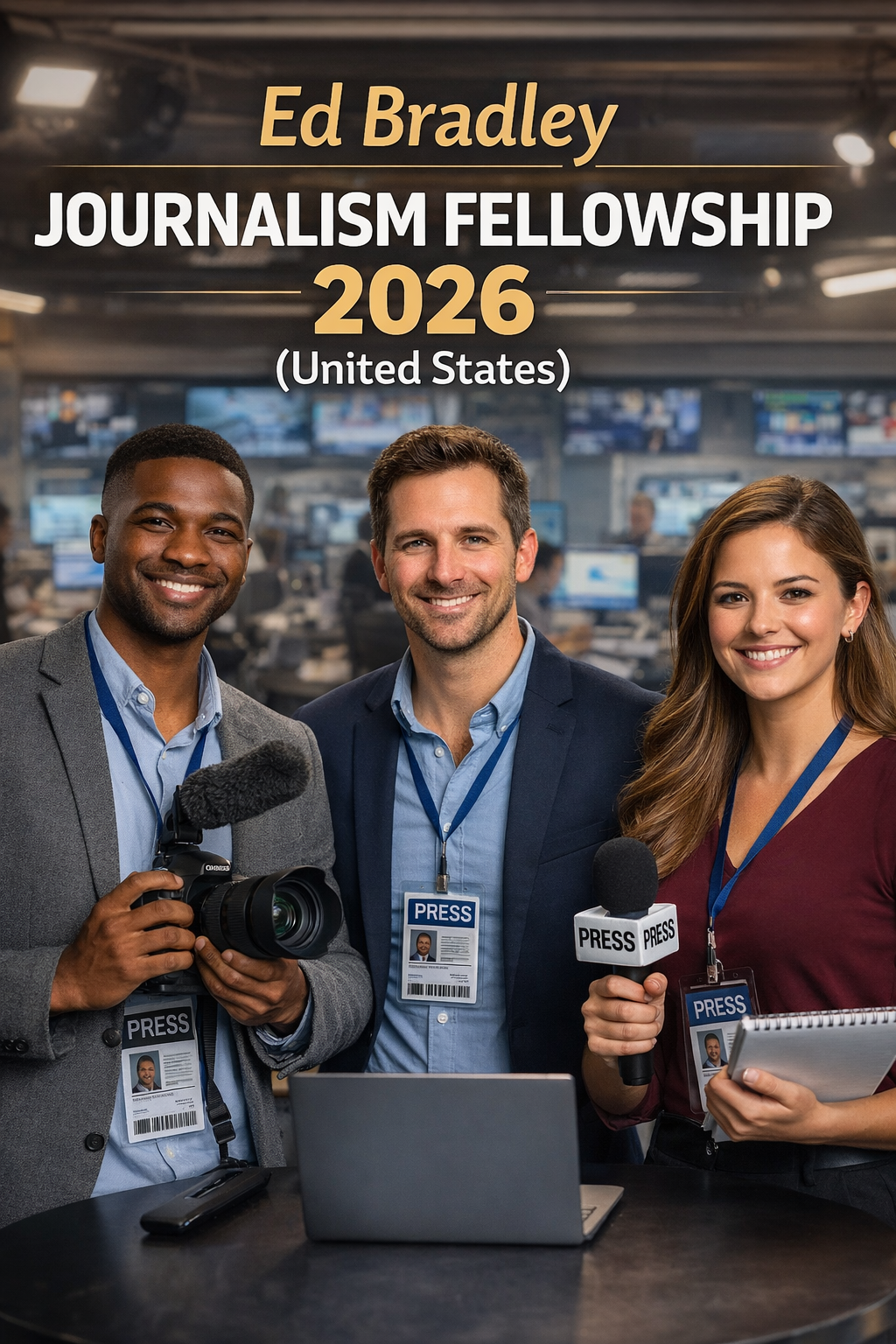
The Ed Bradley Journalism Fellowship is a prestigious program designed to honor the legacy of the legendary journalist Ed Bradley, known for his exceptional reporting on 60 Minutes. This fellowship is aimed at supporting talented journalists in the United States who are committed to pursuing impactful reporting, storytelling, and investigative journalism. In 2026, the fellowship continues to provide emerging journalists with mentorship, funding, and professional growth opportunities to help them shape the future of media.
About the Ed Bradley Journalism Fellowship
The Ed Bradley Journalism Fellowship was established to celebrate the groundbreaking contributions of Ed Bradley to journalism. Bradley’s work was marked by integrity, courage, and dedication to telling stories that matter. Through this fellowship, the program seeks to empower journalists who demonstrate a passion for in-depth reporting and who are committed to advancing the craft of journalism in the United States.
Fellows are selected based on their exceptional journalistic talent, commitment to public service reporting, and innovative approaches to storytelling. The program emphasizes diversity, inclusion, and mentorship, aiming to nurture journalists from all backgrounds who can contribute meaningfully to the media landscape.
Who Should Apply?
The Ed Bradley Journalism Fellowship is ideal for early-career journalists, mid-career reporters seeking specialized training, or professional writers and media professionals interested in investigative and narrative reporting. Eligible candidates typically include:
- Recent graduates with journalism degrees or related experience.
- Professional journalists seeking to advance their careers in reporting or investigative journalism.
- Independent reporters or media professionals with notable projects or publications.
Applicants should demonstrate strong writing skills, ethical reporting, and the ability to produce stories that resonate with the public. The fellowship encourages applicants from underrepresented communities and those covering marginalized voices in society.
Benefits of the Fellowship
The Ed Bradley Journalism Fellowship offers a comprehensive set of benefits designed to support professional development, including:
- Financial Support: Fellows receive a stipend to cover living and research expenses during the program.
- Mentorship: Participants are paired with experienced journalists and editors for one-on-one mentorship and guidance.
- Networking Opportunities: Fellows gain access to exclusive media events, workshops, and industry conferences.
- Professional Growth: The fellowship provides training in investigative techniques, multimedia reporting, and storytelling best practices.
Through these benefits, fellows can strengthen their reporting skills, expand their professional network, and contribute to journalism that drives meaningful change in society.
Ed Bradley Fellowship Goals
The primary goals of the Ed Bradley Journalism Fellowship include:
- Preserving the legacy of Ed Bradley through nurturing the next generation of journalists.
- Encouraging rigorous, ethical, and socially impactful reporting.
- Providing mentorship and guidance to enhance professional development.
- Supporting diversity and inclusion in journalism by reaching underrepresented communities.
By achieving these goals, the fellowship ensures that the spirit of Ed Bradley’s journalism continues to influence the media landscape and inspire journalists nationwide.
For more information about the fellowship and Ed Bradley’s legacy, visit the official [Ed Bradley Journalism Fellowship page](https://www.cbsnews.com/team/ed-bradley/) for detailed insights.
Eligibility Criteria for Ed Bradley Journalism Fellowship 2026
To be considered for the Ed Bradley Journalism Fellowship in 2026, applicants must meet specific eligibility criteria that ensure the fellowship attracts skilled and dedicated journalists. The criteria include:
- Nationality: Applicants must be citizens or permanent residents of the United States.
- Professional Background: Open to early-career journalists, mid-career reporters, and media professionals with a record of published work or significant reporting experience.
- Education: A degree in journalism, communications, or a related field is preferred but not strictly required for experienced reporters.
- Portfolio: Candidates must have a portfolio showcasing high-quality journalism, investigative reporting, or multimedia storytelling.
- Commitment to Journalism: Demonstrated dedication to ethical reporting, impactful storytelling, and serving the public interest.
The fellowship especially encourages applications from underrepresented groups, minority journalists, and those reporting on marginalized communities to promote diversity in the media landscape.
Application Process for Ed Bradley Journalism Fellowship 2026
The application process for the Ed Bradley Journalism Fellowship is designed to be thorough, ensuring that candidates with the highest potential are selected. Follow these steps to apply:
- Visit the Official Fellowship Website: Start your application at the Ed Bradley Fellowship page for the latest updates and instructions.
- Create an Account: Register on the fellowship portal with your personal details, email, and password.
- Submit Personal Information: Provide your full name, contact information, educational background, and professional experience.
- Attach Required Documents: Upload your CV, journalism portfolio, and any supporting materials (see section below).
- Write a Personal Statement: Explain your motivation, career goals, and why you are a strong fit for the fellowship.
- Submit References: Include 2–3 professional references who can attest to your journalistic skills and integrity.
- Review and Submit: Carefully review your application before submission. Late or incomplete applications are typically not considered.
Applications are reviewed by a panel of experienced journalists and editors who evaluate candidates based on merit, potential, and alignment with Ed Bradley’s legacy of excellence.
Required Documents
Applicants to the Ed Bradley Journalism Fellowship 2026 must provide the following documents to ensure a complete evaluation of their skills and experience:
- Curriculum Vitae (CV): Highlight your professional experience, education, and relevant projects.
- Portfolio of Work: Include published articles, investigative reports, multimedia content, or other journalistic work.
- Personal Statement: A 500–800 word essay describing your motivation, career goals, and contribution to journalism.
- Letters of Recommendation: Two to three letters from mentors, editors, or professors who can attest to your professional capabilities.
- Proof of U.S. Citizenship or Residency: Copy of passport, green card, or relevant documentation.
Application Deadlines
Meeting deadlines is critical for consideration in the fellowship. While specific 2026 dates may be confirmed closer to the application period, previous cycles indicate the following timeline:
- Application Opens: Typically in January 2026
- Application Deadline: Late March 2026
- Interview Notifications: April – May 2026
- Final Selection Announced: June 2026
- Fellowship Start Date: July 2026
For the most accurate and updated dates, applicants should regularly check the official Ed Bradley Fellowship page.
Selection Process for Ed Bradley Journalism Fellowship 2026
The Ed Bradley Journalism Fellowship selection process is rigorous, designed to identify journalists with exceptional talent, integrity, and commitment to impactful reporting. The process typically involves several stages:
- Initial Screening: Fellowship applications are reviewed to ensure all eligibility requirements are met, including citizenship, portfolio, and submitted documents.
- Portfolio Review: A panel of experienced journalists evaluates the quality, relevance, and originality of the applicant’s work.
- Interviews: Shortlisted candidates are interviewed by a selection committee. Interviews may include discussions on journalistic ethics, reporting experience, and career goals.
- Final Selection: Fellows are chosen based on merit, potential for growth, alignment with Ed Bradley’s legacy, and demonstrated commitment to public-interest journalism.
Successful applicants are notified via email and provided with details about the fellowship start date, responsibilities, and benefits.
Fellowship Structure
The Ed Bradley Journalism Fellowship 2026 is structured to provide both practical and professional development experiences. The typical fellowship structure includes:
- Duration: Most fellowships last 6–12 months, allowing fellows sufficient time for in-depth projects.
- Hands-On Reporting: Fellows work on real-world reporting assignments, including investigative and narrative journalism projects.
- Workshops and Training: Regular sessions on investigative techniques, multimedia storytelling, and data journalism.
- Project-Based Learning: Fellows complete a capstone project or investigative piece that highlights their journalistic skills.
Mentorship and Guidance
One of the most valuable aspects of the Ed Bradley Journalism Fellowship is the personalized mentorship offered to fellows:
- One-on-One Mentorship: Fellows are paired with experienced journalists who provide guidance, career advice, and constructive feedback.
- Editorial Support: Fellows receive editing and guidance to enhance the quality and impact of their reporting.
- Professional Development: Mentors help fellows refine skills in investigative reporting, interview techniques, ethical journalism, and multimedia storytelling.
Mentorship ensures that fellows not only gain experience but also build lasting professional relationships that extend beyond the fellowship period.
Networking Opportunities
The fellowship provides unmatched opportunities to connect with leading media professionals, organizations, and alumni:
- Industry Events: Fellows attend conferences, workshops, and panels where they can engage with influential journalists and media leaders.
- Collaborative Projects: Opportunities to work with other fellows, editors, and media houses on high-impact stories.
- Alumni Network: Access to a growing network of Ed Bradley Fellowship alumni, providing mentorship, job opportunities, and collaborative partnerships.
These networking opportunities help fellows advance their careers, increase visibility, and gain exposure to new reporting techniques and media platforms.
Professional Opportunities After the Fellowship
Completing the Ed Bradley Journalism Fellowship opens doors to a wide range of professional opportunities in journalism and media, including:
- Career Advancement: Fellows often secure positions at leading media outlets, including national newspapers, broadcast networks, and online publications.
- Investigative Reporting Roles: Many fellows move into specialized investigative roles or start independent reporting projects.
- Mentorship and Teaching: Alumni may contribute back to the journalism community by mentoring new fellows or teaching journalism courses.
- Awards and Recognition: Fellows gain increased visibility for their work, which can lead to journalism awards and other professional accolades.
The Ed Bradley Fellowship equips journalists with the experience, credibility, and network needed to thrive in the competitive media industry while upholding high standards of ethical and impactful reporting.
Ed Bradley Journalism Fellowship FAQs
1. Who is eligible for the New York Times Fellowship?
The New York Times Fellowship is typically open to early-career journalists, recent graduates, and media professionals with demonstrated reporting skills. Applicants should have a strong portfolio, commitment to journalistic integrity, and a passion for investigative or feature reporting. U.S. citizenship or legal residency may be required depending on the fellowship program.
2. What is the Pulitzer Fellowship for journalism?
The Pulitzer Fellowship supports journalists pursuing excellence in investigative, feature, or public-interest reporting. It often provides financial support, mentorship, and access to resources for investigative projects. The fellowship is awarded to journalists who demonstrate exceptional skill, originality, and dedication to high-impact reporting.
3. What is the MFWA fellowship for journalists?
The MFWA Fellowship, offered by the Media Foundation for West Africa (MFWA), supports journalists in Africa and globally. It focuses on promoting media freedom, investigative journalism, and professional development. Fellows gain mentorship, training, and networking opportunities to enhance their reporting skills and advance press freedom initiatives.
4. What is the fellowship for the future of journalism?
The Fellowship for the Future of Journalism is designed to support journalists exploring innovative reporting methods, digital media, and emerging storytelling technologies. It encourages experimentation, multimedia reporting, and projects that anticipate the evolving landscape of journalism, helping fellows shape the future of news reporting.